

Hey there! As an agricultural tire supplier, I've seen firsthand how crucial proper tire alignment is for farmers and anyone involved in the agricultural industry. In this blog, I'm gonna share some tips on how to ensure the proper alignment of agricultural tires.
Why Proper Alignment Matters
First off, let's talk about why proper alignment is so important. When your agricultural tires are properly aligned, it can improve fuel efficiency. Misaligned tires can cause your tractor or other agricultural equipment to work harder, which means burning more fuel. That's money out of your pocket!
It also extends the lifespan of your tires. When tires are misaligned, they wear unevenly. This can lead to premature wear and tear, and you'll have to replace them sooner than you should. And let's face it, agricultural tires aren't cheap, so getting the most out of them is key.
Proper alignment also enhances the safety of your equipment. It ensures better handling and stability, especially when you're working on uneven terrain. You don't want to be in a situation where your tractor starts to veer off to one side because of misaligned tires.
Signs of Misaligned Tires
Before we dive into how to ensure proper alignment, let's look at some signs that your agricultural tires might be misaligned. One of the most obvious signs is uneven tire wear. If you notice that one side of the tire is wearing down faster than the other, that's a red flag.
Another sign is your equipment pulling to one side. When you're driving your tractor or other machinery, if it keeps drifting to the left or right, it could be due to misaligned tires.
You might also feel vibrations in the steering wheel or the seat. This can be a sign that the tires aren't aligned correctly and are causing the equipment to shake.
Steps to Ensure Proper Alignment
Regular Inspections
The first step in ensuring proper alignment is to conduct regular inspections. You should visually inspect your tires at least once a month. Look for any signs of uneven wear, cuts, or bulges. If you notice anything suspicious, it's time to take a closer look.
You can also use a tread depth gauge to measure the tread depth across the tire. If the tread depth varies significantly from one side to the other, it could indicate misalignment.
Professional Alignment Checks
It's a good idea to have your agricultural tires professionally aligned at least once a year. A professional alignment service has the tools and expertise to accurately measure and adjust the alignment of your tires. They can use specialized equipment to check the camber, caster, and toe angles of your tires.
The camber refers to the vertical tilt of the tire. If the camber is off, it can cause uneven wear on the inside or outside of the tire. The caster is the angle of the steering axis, and it affects the steering stability of your equipment. The toe angle is the angle at which the tires point inward or outward. Incorrect toe angles can cause the tires to scrub against the ground, leading to premature wear.
Adjusting Tire Pressure
Proper tire pressure is also essential for proper alignment. You should always follow the manufacturer's recommended tire pressure for your equipment. Underinflated or overinflated tires can cause uneven wear and affect the alignment of your tires.
Check your tire pressure at least once a week, especially before you start any major work. Use a reliable tire pressure gauge to ensure accurate readings. If the pressure is too low, add air; if it's too high, release some air.
Using the Right Tires for the Job
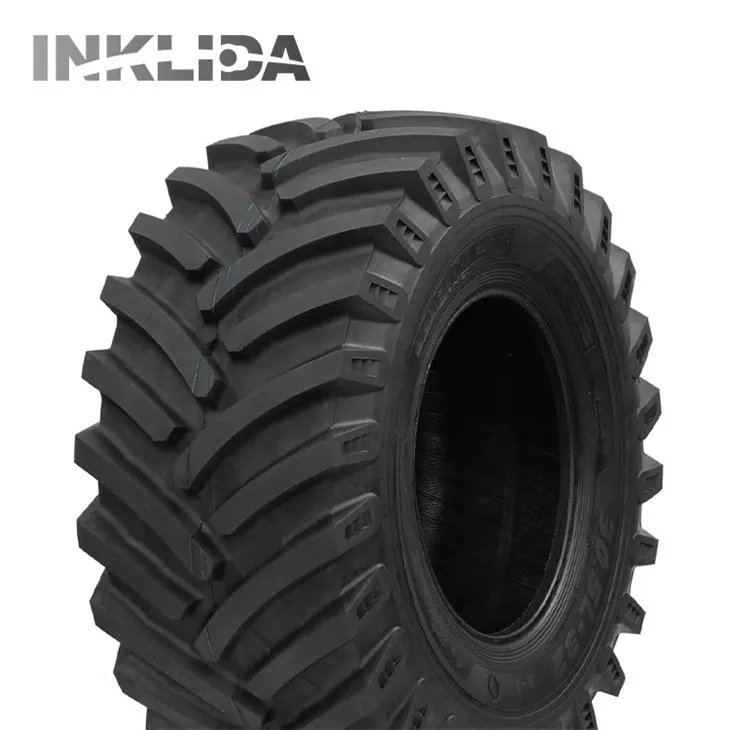
Using the right type of agricultural tires for your specific application is crucial. For example, if you're working on dry land, you might want to consider R1 Tractor Tires for Dry Land Use. These tires are designed to provide good traction on dry, hard surfaces.
Different types of tires have different tread patterns and designs, which are optimized for specific conditions. Using the wrong tires can not only affect the performance of your equipment but also lead to misalignment issues.
Handling and Storage
How you handle and store your agricultural tires can also impact their alignment. When you're transporting your equipment, make sure the tires are properly secured. Bumps and vibrations during transportation can cause the tires to shift and become misaligned.
When storing your equipment, make sure the tires are on a flat, stable surface. Avoid storing them in direct sunlight or in areas with extreme temperatures, as this can cause the rubber to degrade and affect the alignment.
Conclusion
Ensuring the proper alignment of agricultural tires is essential for the performance, safety, and longevity of your equipment. By following these tips, you can keep your tires in good condition and avoid costly repairs and replacements.

If you're in the market for new agricultural tires or need more information about tire alignment, don't hesitate to reach out. We're here to help you find the right tires for your needs and ensure they're properly aligned. Contact us today to start a discussion about your agricultural tire requirements and let's work together to keep your equipment running smoothly.
References
- "Agricultural Tire Maintenance Guide" - Industry publication on tire care.
- Manufacturer's manuals for various agricultural equipment.