

Hey there! As an agricultural tire supplier, I often get asked about all sorts of things related to our products. One question that's been coming up a lot lately is, "What is the noise level of agricultural tires during operation?" Well, let's dive right into it and break it down.
First off, it's important to understand that the noise level of agricultural tires can vary quite a bit depending on several factors. The type of tire, the surface it's running on, the speed of the vehicle, and even the load it's carrying all play a role in how loud those tires are going to be.
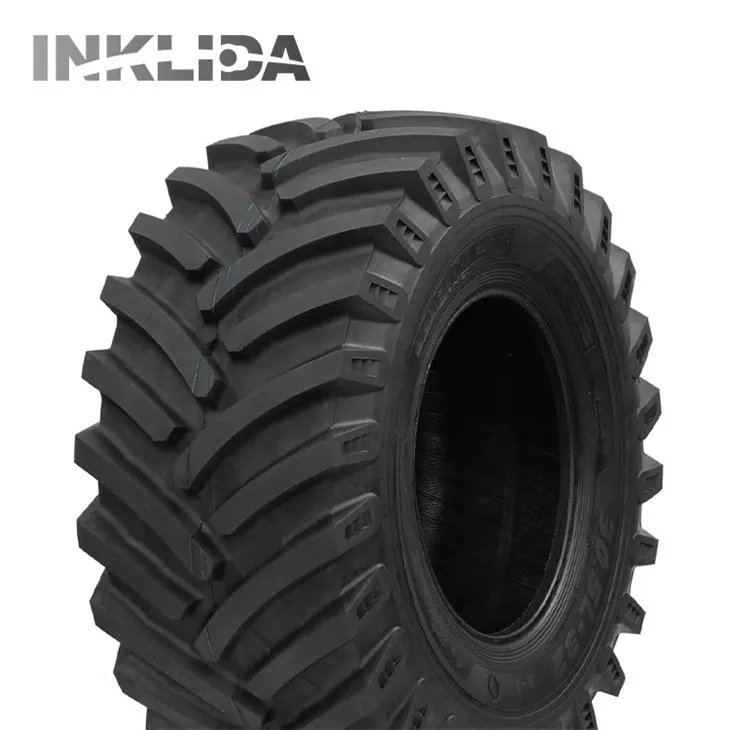
Let's start with the type of tire. There are different types of agricultural tires designed for various purposes. For example, R1 Tractor Tires for Dry Land Use are specifically made for dry soil conditions. These tires usually have a more aggressive tread pattern. That aggressive tread is great for getting traction on dry, hard ground, but it can also create more noise. The deep grooves and large lugs on these tires interact with the ground in a way that causes vibrations and air displacement, which in turn generate noise.
On the other hand, there are tires designed for wetter conditions or more general - purpose use. These tires often have a less aggressive tread pattern. The shallower grooves and smaller lugs mean less interaction with the ground in a way that creates noise. So, they tend to be a bit quieter during operation.
The surface the tire is running on is another huge factor. If you're on a smooth, hard - packed dirt road, the tires are going to make less noise compared to when you're on a rough, rocky field. On a smooth surface, the tires roll more evenly, and there's less disruption to the airflow around the tire. But on a rough surface, the tires are constantly hitting bumps and irregularities. Each impact creates a vibration that translates into noise. It's like the difference between driving a car on a freshly paved highway and an unpaved country road.
Speed also matters. Just like with any vehicle, the faster the tractor or other agricultural equipment is going, the louder the tires are going to be. As the speed increases, the tires are moving through the air more quickly, and the interaction between the tire and the ground becomes more intense. The air rushing around the tire and the increased force of the tire hitting the ground both contribute to a higher noise level.
The load on the tire is yet another factor. When a tire is carrying a heavy load, it deforms more under the weight. This deformation changes the way the tire interacts with the ground. The increased contact area and the way the tread is compressed can lead to more noise. It's similar to how a fully - loaded truck makes more noise than an empty one.
Now, you might be wondering why the noise level of agricultural tires even matters. Well, there are a few reasons. For one, excessive noise can be a nuisance to the operator. Long hours in a noisy tractor can be tiring and even lead to hearing problems over time. It can also be a concern for nearby residents. If you're working in an area close to homes, the noise from the agricultural equipment can cause complaints.
Some farmers also look at noise level as an indicator of tire performance. A tire that makes a lot of noise might be wearing out faster or not performing as efficiently as it should. So, keeping an eye on the noise level can help in maintenance and in making decisions about when to replace the tires.
As an agricultural tire supplier, we're always looking for ways to reduce the noise level of our tires. We invest in research and development to come up with new tread designs and materials that can minimize noise while still providing excellent traction and durability. We know that a quieter tire is not only better for the operator and the environment but also a more attractive option for our customers.
If you're in the market for agricultural tires and noise level is a concern for you, we can help. We have a wide range of tires to choose from, and our team of experts can guide you to the right tire based on your specific needs. Whether you're looking for a tire for dry land use, wet conditions, or something in between, we've got you covered.
So, if you're interested in learning more about our agricultural tires, or if you want to discuss your specific requirements, don't hesitate to reach out. We're here to help you find the perfect tire solution for your agricultural needs. Let's get your equipment running smoothly and quietly!

References
- Agricultural Tire Handbook: A comprehensive guide on the different types and characteristics of agricultural tires.
- Journal of Agricultural Engineering Research: Articles on the latest research in agricultural tire technology and performance.