

Hey there! As a supplier of industrial tire flaps, I often get asked whether these nifty little accessories affect the handling of vehicles. Well, let's dive right into it and explore this question from all angles.
First off, what exactly are industrial tire flaps? They're basically protective barriers that sit between the tire and the wheel rim. These flaps come in various shapes, sizes, and materials, depending on the specific application. For instance, you've got the Forklift Rubber Flap, which is designed to withstand the heavy - duty use in forklift operations. And then there's the Natural Tire Tube Flap 16/70 - 20, perfect for certain types of trucks and industrial vehicles.
Now, let's talk about how they might impact vehicle handling. One of the main functions of tire flaps is to protect the inner tube from damage caused by the rim. This is crucial because a damaged inner tube can lead to sudden tire deflation, which is a major safety hazard and can seriously affect handling. When the inner tube is intact thanks to the tire flap, the tire maintains its proper shape and pressure. A tire with the right pressure provides consistent traction, which is essential for smooth steering, braking, and acceleration.
In terms of steering, a well - protected tire can respond more predictably to the driver's input. If the inner tube is damaged and the tire starts to lose air unevenly, the vehicle might pull to one side. This makes it difficult to keep the vehicle on a straight path, especially at high speeds. With a tire flap in place, the risk of this happening is significantly reduced, so the steering feels more stable and responsive.
Braking is another area where tire flaps can have an impact. When you hit the brakes, the tires need to grip the road surface firmly. A tire with a damaged inner tube might not be able to distribute the braking force evenly. This can lead to longer stopping distances and a less controlled braking experience. By protecting the inner tube, tire flaps help ensure that the tire can perform optimally during braking, giving you more confidence on the road.
Acceleration is also affected. A tire that maintains its shape and pressure can transfer the engine's power to the road more efficiently. If the inner tube is damaged, the tire might deform in an unpredictable way during acceleration, causing a loss of power and a jerky acceleration. With a tire flap, the tire remains in good condition, allowing for smoother and more efficient acceleration.
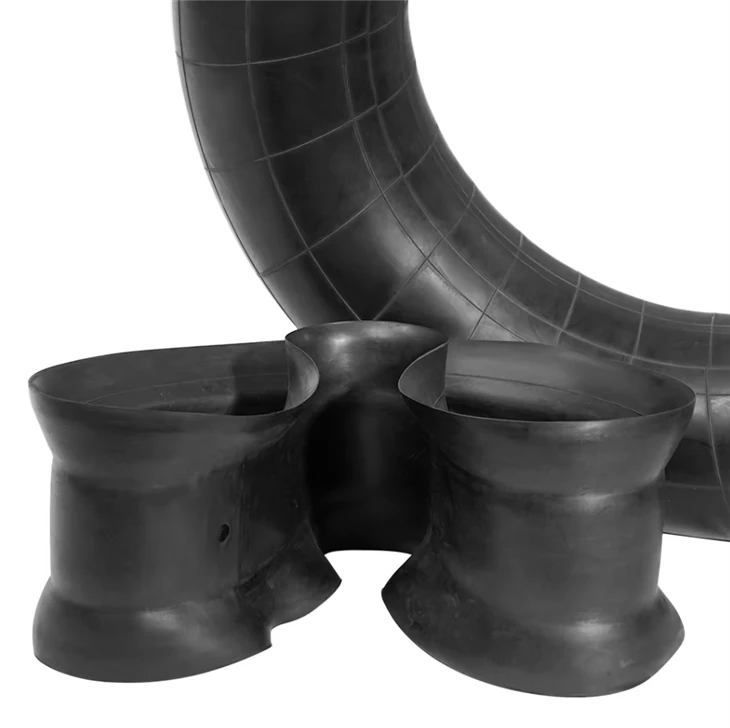

However, it's important to note that not all tire flaps are created equal. The quality of the material and the design of the flap can make a big difference. A poorly made tire flap might not fit properly or might not provide adequate protection. This could potentially cause problems. For example, if the flap is too thick or too stiff, it might interfere with the normal movement of the tire. This could lead to uneven wear on the tire and affect handling in a negative way.
On the other hand, a high - quality tire flap that is designed to fit the specific tire and vehicle will have minimal negative impact on handling while providing maximum protection. The key is to choose the right tire flap for your vehicle. That's where we come in as a supplier. We offer a wide range of industrial tire flaps that are carefully engineered to meet the needs of different vehicles and applications.
We've done our research and testing to make sure that our tire flaps not only protect the inner tube but also have a positive or at least neutral effect on handling. Our team of experts is constantly working to improve the design and materials of our tire flaps. We use advanced manufacturing techniques to ensure that each flap is of the highest quality.
Another factor to consider is the environment in which the vehicle operates. In industrial settings, such as construction sites or warehouses, the terrain can be rough and full of debris. A tire flap can protect the inner tube from sharp objects on the ground, which is common in these environments. If the inner tube gets punctured by a nail or a piece of metal, it can lead to a flat tire. And as we've already discussed, a flat tire can have a huge impact on handling.
In addition, in extreme weather conditions, tire flaps can play a role. In hot weather, tires tend to expand, and the inner tube is under more stress. A good tire flap can help the inner tube withstand this stress, maintaining the tire's performance. In cold weather, the rubber in the tire can become more brittle, and the inner tube is more vulnerable to damage. The tire flap acts as an extra layer of protection, ensuring that the tire remains in good condition and the vehicle handles well.
So, do industrial tire flaps affect the handling of vehicles? The answer is yes, but in a mostly positive way. They protect the inner tube, which in turn helps the tire maintain its shape and pressure. This leads to better traction, more stable steering, shorter braking distances, and smoother acceleration. Of course, it's important to choose the right tire flap for your vehicle.
If you're in the market for industrial tire flaps, we'd love to help you find the perfect fit for your vehicle. Our team of experts can guide you through the selection process, making sure you get a tire flap that will enhance your vehicle's handling and safety. Whether you're looking for a Forklift Rubber Flap or a Natural Tire Tube Flap 16/70 - 20, we've got you covered.
Contact us today to start the conversation about how our industrial tire flaps can improve the performance of your vehicles. We're here to provide you with the best products and the most reliable service.
References
- "Tire Technology Handbook" by the Tire and Rim Association
- "Vehicle Dynamics: Theory and Application" by Rajesh Rajamani