

The tear resistance of an industrial inner tube is a critical property that directly impacts its performance, durability, and safety in various industrial applications. As a leading industrial inner tube supplier, we understand the significance of tear resistance and its implications for our customers. In this blog post, we will delve into the concept of tear resistance, explore the factors that affect it, and discuss why it matters in the industrial setting.
Understanding Tear Resistance
Tear resistance refers to the ability of an industrial inner tube to withstand tearing forces without rupturing or failing. When an inner tube is in use, it is subjected to a variety of stresses, including friction, pressure, and impact. These forces can cause small cuts, nicks, or abrasions on the surface of the inner tube, which can gradually grow into larger tears if the tube does not have sufficient tear resistance.
A high tear resistance means that the inner tube can resist the propagation of tears, even when it is exposed to harsh conditions. This is particularly important in industrial applications where the inner tubes are often used in rough environments, such as construction sites, mines, and warehouses. In these settings, the inner tubes may come into contact with sharp objects, uneven surfaces, or heavy loads, which can increase the risk of tearing.
Factors Affecting Tear Resistance
Several factors can influence the tear resistance of an industrial inner tube. These include the material used, the manufacturing process, and the design of the inner tube.
Material
The choice of material is one of the most important factors affecting tear resistance. Different materials have different mechanical properties, which can impact their ability to resist tearing. For example, natural rubber is known for its high tear strength and elasticity, making it a popular choice for industrial inner tubes. Synthetic rubbers, such as styrene-butadiene rubber (SBR) and nitrile rubber (NBR), also offer good tear resistance and are often used in combination with natural rubber to enhance performance.

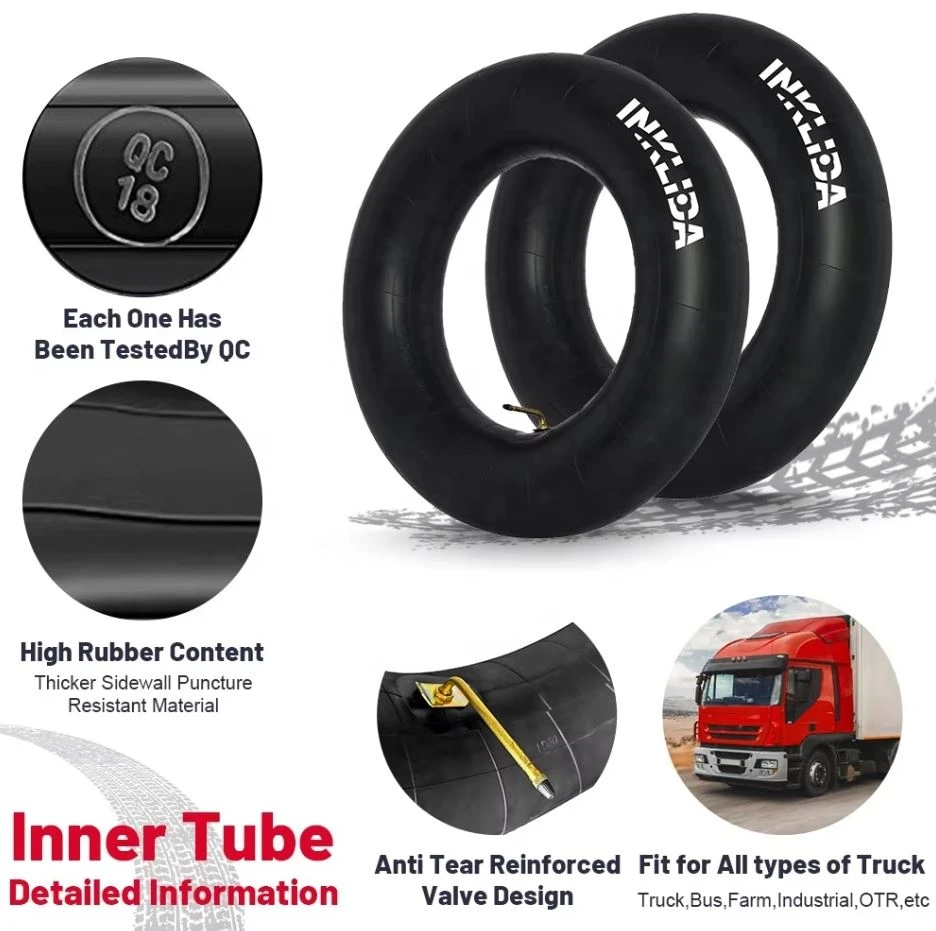
In addition to the type of rubber, the quality of the material also plays a role in tear resistance. High-quality rubber compounds are formulated with additives and fillers that can improve the mechanical properties of the rubber, including tear strength. For example, carbon black is a common filler used in rubber compounds to increase their stiffness and tear resistance.
Manufacturing Process
The manufacturing process can also affect the tear resistance of an industrial inner tube. A well-manufactured inner tube will have a uniform structure and consistent properties throughout, which can enhance its tear resistance. On the other hand, a poorly manufactured inner tube may have defects, such as voids, inclusions, or weak spots, which can reduce its tear resistance and increase the risk of failure.
One of the key steps in the manufacturing process is vulcanization, which is the process of cross-linking the rubber molecules to form a three-dimensional network. Vulcanization can improve the mechanical properties of the rubber, including tear strength, by increasing its stiffness and elasticity. The vulcanization process must be carefully controlled to ensure that the rubber is fully cured and that the cross-linking is uniform throughout the inner tube.
Design
The design of the inner tube can also impact its tear resistance. For example, the thickness of the inner tube wall can affect its ability to resist tearing. A thicker wall generally provides better tear resistance, but it can also increase the weight and cost of the inner tube. Therefore, the design of the inner tube must balance the need for tear resistance with other factors, such as weight, cost, and performance.
In addition to the wall thickness, the shape and size of the inner tube can also affect its tear resistance. For example, an inner tube with a smooth surface and a regular shape is less likely to catch on sharp objects or uneven surfaces, which can reduce the risk of tearing. Similarly, an inner tube with a proper size and fit for the tire can help to distribute the stress evenly and reduce the risk of localized tearing.
Importance of Tear Resistance in Industrial Applications
Tear resistance is of utmost importance in industrial applications for several reasons.
Safety
The safety of workers and equipment is a top priority in any industrial setting. A torn inner tube can lead to a sudden loss of pressure, which can cause the tire to deflate and potentially lead to an accident. For example, in a forklift, a torn inner tube can cause the forklift to lose stability and tip over, which can result in serious injuries to the operator and damage to the equipment. By using industrial inner tubes with high tear resistance, we can reduce the risk of accidents and ensure the safety of workers and equipment.
Durability
Industrial inner tubes are often subjected to heavy use and harsh conditions, which can cause them to wear out quickly. A high tear resistance can help to extend the lifespan of the inner tube by preventing tears from developing and spreading. This can reduce the frequency of inner tube replacements, which can save time and money for our customers.
Performance
The performance of industrial equipment can be significantly affected by the condition of the inner tubes. A torn inner tube can cause the tire to become unbalanced, which can lead to uneven wear and reduced traction. This can affect the handling and maneuverability of the equipment, as well as its fuel efficiency. By using industrial inner tubes with high tear resistance, we can ensure that the tires perform at their best and that the equipment operates smoothly and efficiently.
Our Industrial Inner Tubes with High Tear Resistance
As an industrial inner tube supplier, we are committed to providing our customers with high-quality inner tubes that offer excellent tear resistance. Our inner tubes are made from the finest materials and are manufactured using advanced processes to ensure consistent quality and performance.
We offer a wide range of industrial inner tubes to meet the diverse needs of our customers. Our product line includes 16.5 Inch Industrial Inner Tube, 20x8-10 Forklift Tire Inner Tube, and Forklift Inner Tubes, among others. Each of our inner tubes is designed to provide maximum tear resistance and durability in the most demanding industrial applications.
Contact Us for Industrial Inner Tube Procurement
If you are in the market for high-quality industrial inner tubes with excellent tear resistance, we invite you to contact us. Our team of experts is ready to assist you in selecting the right inner tubes for your specific needs. We can provide you with detailed product information, technical support, and competitive pricing.
Whether you are a small business or a large industrial enterprise, we are committed to providing you with the best products and services. Let us help you improve the safety, durability, and performance of your industrial equipment with our high-quality inner tubes.
References
- Rubber Technology Handbook, Werner Hofmann
- Industrial Rubber Products: Materials, Processing, and Applications, Anil K. Bhowmick and H. L. Stephens