

Hey there! As an industrial inner tube supplier, I often get asked about the hardness of industrial inner tubes. It's a crucial factor that can significantly impact the performance and durability of these tubes. So, let's dive right in and explore what the hardness of an industrial inner tube really means.
First off, what do we mean by the hardness of an industrial inner tube? Well, hardness refers to the resistance of the inner tube material to indentation or deformation. In simpler terms, it's how tough or soft the tube is. This property is usually measured on the Shore hardness scale, which ranges from 0 to 100. A lower Shore hardness value indicates a softer material, while a higher value means a harder one.
The hardness of an industrial inner tube matters a great deal. For instance, if you're using the inner tube in a high - pressure environment, a harder tube is generally better. It can withstand the high pressure without getting damaged easily. On the other hand, in some applications where flexibility is key, a softer inner tube might be more suitable.
Let's talk about the factors that influence the hardness of industrial inner tubes. One of the main factors is the material used in manufacturing. Most industrial inner tubes are made from rubber compounds. Different types of rubber, such as natural rubber, synthetic rubber (like neoprene or butyl rubber), have different inherent hardness levels. Natural rubber is often softer and more flexible, which can be great for applications that require shock absorption. Butyl rubber, on the other hand, is known for its high air - retention properties and can be made in a range of hardnesses depending on the formulation.
The additives used in the rubber compound also play a big role. Fillers like carbon black can increase the hardness of the rubber. The more carbon black is added, the harder the resulting inner tube will be. Other additives, such as plasticizers, can make the rubber softer and more pliable.
The manufacturing process can also affect the hardness. The curing process, for example, is crucial. If the rubber is over - cured, it can become harder and more brittle. Under - curing, on the other hand, can result in a softer and less durable inner tube.
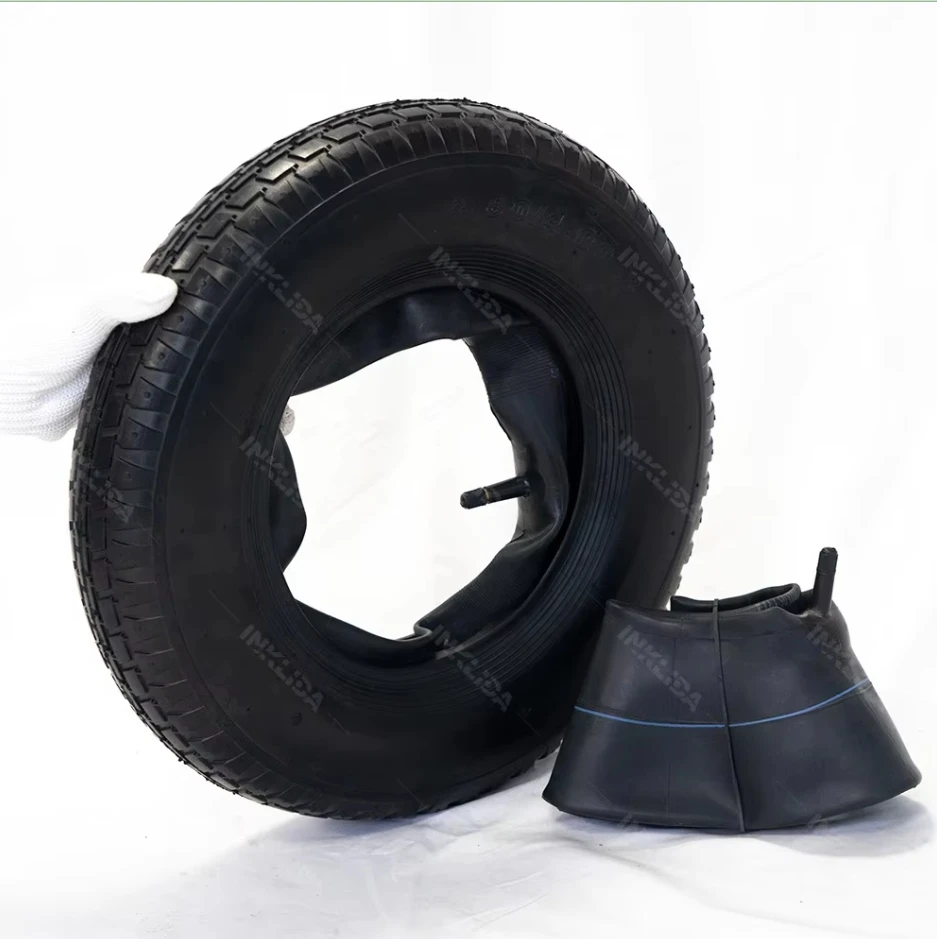
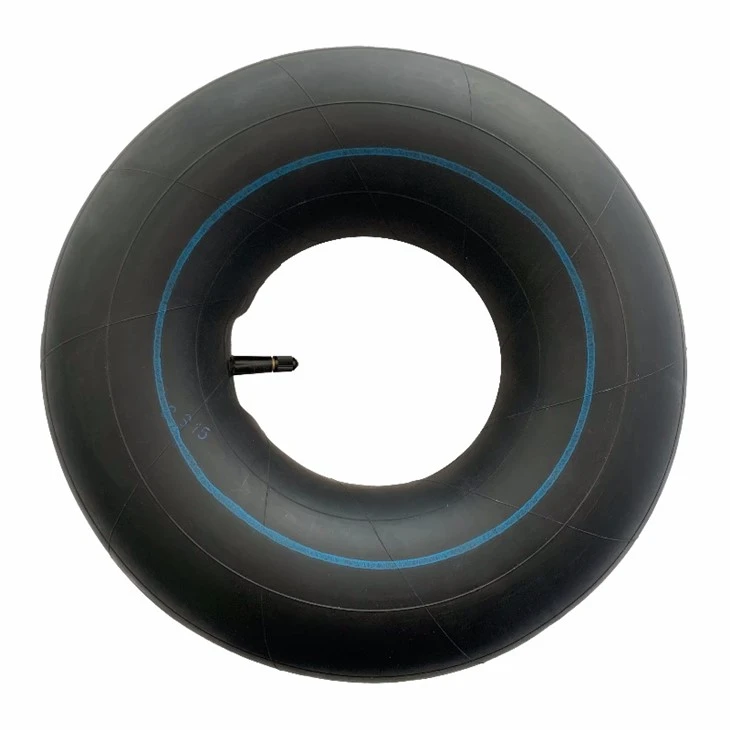
Now, let's take a look at some specific applications and how the hardness of the inner tube matters. In heavy - duty industrial equipment like forklifts or construction machinery, you typically need a harder inner tube. These machines operate under high loads and pressures, so a hard inner tube can better handle the stress. Our 9 Inch TR13 Inner Tube is a great example. It's designed with a relatively high hardness to withstand the tough conditions in industrial settings.
For lighter - duty applications, such as small carts or garden equipment, a softer inner tube might be more appropriate. A softer tube can provide a smoother ride and better shock absorption. Our Inner Tube 400 - 8 Industrial Tyre Tube is well - suited for these types of applications. It offers a good balance of flexibility and durability.
In some cases, you might need to consider the terrain as well. If the equipment is going to be used on rough or uneven surfaces, a harder inner tube can prevent punctures and cuts. But if it's mainly for use on smooth floors, a softer tube can offer better traction.
Another aspect to consider is the inflation pressure. Harder inner tubes can generally handle higher inflation pressures. This is important because the right inflation pressure is essential for the proper functioning of the tire and inner tube. Over - inflating a soft inner tube can cause it to burst, while under - inflating a hard tube can lead to uneven wear.
We also offer the 16.5 Inch Industrial Inner Tube, which is suitable for a variety of industrial vehicles. The hardness of this tube is carefully engineered to meet the specific requirements of different applications.
When it comes to choosing the right hardness for your industrial inner tube, it's not always straightforward. You need to take into account all the factors we've discussed, including the application, the load, the terrain, and the inflation pressure. It's also a good idea to consult with an expert. As a supplier, we have a lot of experience in this area and can help you make the right choice.
If you're in the market for industrial inner tubes, don't hesitate to reach out. We're here to provide you with the best products and advice. Whether you need a hard inner tube for heavy - duty applications or a soft one for more flexible use, we've got you covered. Contact us to start a procurement discussion, and let's find the perfect industrial inner tube for your needs.
References:
- Tire and Rubber Handbook
- Industrial Rubber Products Manual